Neuroplastic Pain in Fibromyalgia, Explained
Jun 08, 2026
Understanding Fibromyalgia
Your scans are clean. Your bloodwork looks normal. Yet the pain is everywhere and it is real. Neuroplastic pain explains how that happens, and why fibromyalgia can change.
Short answer: Neuroplastic pain is real pain generated by the brain and nervous system rather than by tissue damage. In fibromyalgia, threat circuits and pain pathways become sensitized and learn to fire on their own. Because the brain learned the pattern, the brain can also unlearn it.
You have been told the pain is unexplained. You have been handed the word fibromyalgia and not much else. Neuroplastic pain is the missing explanation. It is not a softer way of saying the pain is imaginary. It is a precise account of where chronic fibromyalgia pain comes from when there is no injury to point to.
This is the foundation under everything we teach at Westlake Wellness. If you have read whether fibromyalgia pain is real or in your head, this is the mechanism behind that answer.
What neuroplastic pain actually means
Neuroplasticity is the brain's ability to change. It rewires based on what it practices. Learning a language, building a habit, recovering a skill after injury, all of it runs on neuroplasticity.
Pain runs on the same machinery. Pain is not a simple readout from the body. It is a decision the brain makes about danger, built from many signals at once. When the brain repeats that decision often enough, the pathway strengthens. The pain becomes easier to trigger and harder to switch off. That is neuroplastic pain. The hardware is working. It has just learned the wrong pattern.
Real pain, no tissue damage
This is the part that matters most. Neuroplastic pain hurts exactly as much as pain from a broken bone. The brain regions that produce the sensation are the same. Nothing about it is fake or exaggerated.
What is different is the source. The signal is not coming from damaged tissue. It is coming from a nervous system stuck in a protective, high-alert pattern. This is why your tests come back normal. They are looking in the wrong place. The problem is in how the system processes signals, not in the parts being scanned.
How the brain learns pain
The brain is a prediction machine. It does not wait for clean data. It guesses what is happening based on past experience, then updates. With pain, the brain is constantly asking one question: how much danger am I in right now.
If the answer has been high for a long time, through stress, fear, illness, or a frightening diagnosis, the brain starts to predict danger by default. It lowers the threshold for pain. Signals that were once neutral now read as threats. A normal touch, a long day, a change in weather, any of these can trip an alarm that no longer needs a real emergency to sound.
The brain learned to protect you. The pain is the protection working too well, for too long.
Why fibromyalgia is a neuroplastic condition
Fibromyalgia is widely understood as a disorder of pain processing rather than tissue disease. The nervous system amplifies pain signals. The volume knob is turned up across the whole body, which is why the pain is widespread, moves around, and comes with fatigue, poor sleep, and brain fog (Clauw, 2014).
That amplification is neuroplastic. It is learned and maintained by a sensitized system. This reframes the whole condition. You are not carrying a body that is breaking down. You are carrying a nervous system that has learned to overprotect you. That is a very different problem, and a more workable one.
The loop that keeps the pain wired in
Neuroplastic pain does not just appear. It gets reinforced. Pain raises a sense of threat. Threat raises vigilance and searching for what is wrong. That searching and worry feed more threat, which feeds more pain. The loop teaches the brain, every day, that the body is dangerous. This is the locked half of our Loaded and Locked model.
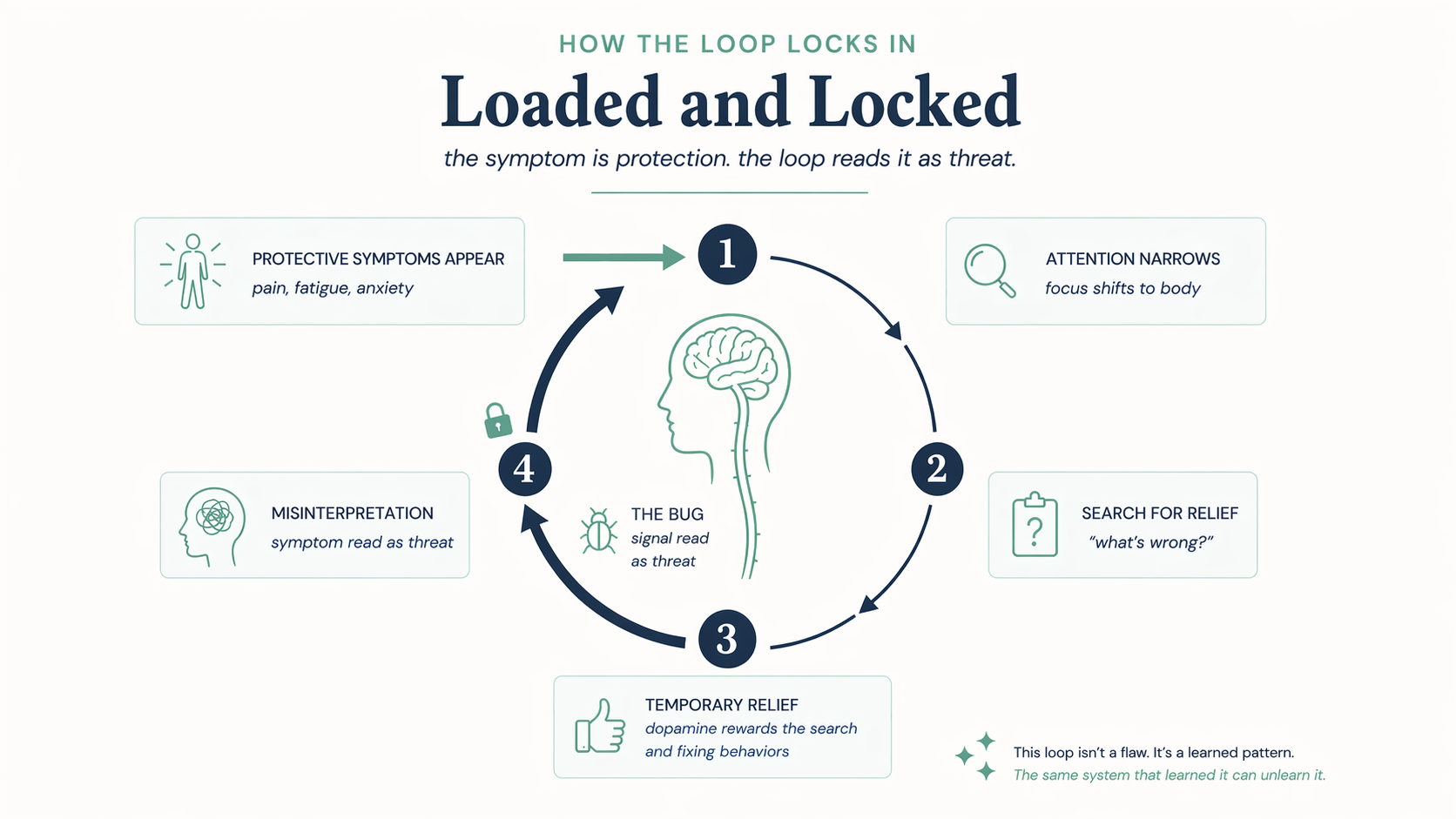
The good news hides inside the bad news. A pattern that is reinforced by repetition can be weakened by changing the repetition. You do not have to fight the pain head on. You change what the brain is learning.
Why this is hopeful
If the pain were structural damage, you would be limited to managing it. Because it is neuroplastic, it can change. The same plasticity that built the pattern can rebuild a calmer one.
This is not wishful thinking. In a randomized trial of people with chronic back pain, a treatment built on reframing pain as a brain-generated, safe signal produced large and lasting drops in pain compared with usual care (Ashar et al., 2022). The mechanism it targets, a sensitized and fearful pain system, is the same one at work in fibromyalgia. The work is to teach the brain that the body is safe, repeatedly, until the prediction updates.
What to do first
You do not start by attacking symptoms. You start by changing the brain's read on danger. A few first moves:
- Reframe a sensation once a day. When pain rises, name it as a false alarm from a protective system, not as evidence of damage. This is the core skill in pain reprocessing therapy.
- Lower the background threat. Slow exhales, steady sleep timing, and gentle movement tell the system there is no emergency. Lower load means a higher pain threshold.
- Reduce the searching. Constant symptom checking is fuel for the loop. Notice it, then deliberately widen your attention to something neutral or pleasant.
None of this is about ignoring your body or pretending you feel fine. It is about retraining what your nervous system has learned. Done consistently, that is how neuroplastic pain unwinds.
Common questions
Is neuroplastic pain the same as saying the pain is psychological?
No. Neuroplastic pain is produced by real activity in the nervous system and hurts like any other pain. It is not imagined and it is not a character flaw. The label describes where the pain is generated, in pain-processing pathways rather than damaged tissue.
Is fibromyalgia neuroplastic pain?
Fibromyalgia is widely understood as a disorder of pain amplification in a sensitized nervous system rather than tissue disease. That amplification is learned and maintained, which makes it neuroplastic in nature and, importantly, changeable.
Can neuroplastic pain be reversed?
It can change. The brain pathways that strengthen pain can also weaken with the right repeated input. Approaches that teach the brain the body is safe have produced lasting pain reduction in trials of chronic pain. Results vary by person and are not guaranteed.
Why are my scans and bloodwork normal if I am in this much pain?
Because the problem is in signal processing, not in the tissue being scanned. Standard imaging and labs are not designed to detect a sensitized pain system, so they often look normal even when pain is severe and real.
How long does it take to retrain neuroplastic pain?
There is no fixed timeline. Many people notice shifts within a few weeks of consistent practice, while durable change usually takes months. The pace depends on how loaded and locked the system is and how regularly the work is done.

Not another protocol. A map.
The free Fibromyalgia Healing Roadmap lays out the four phases for calming a sensitized nervous system.
Get the free roadmapReferences. Clauw DJ. Fibromyalgia: A Clinical Review. JAMA. 2014;311(15):1547-1555. https://jamanetwork.com/journals/jama/fullarticle/1860480 Ashar YK, et al. Effect of Pain Reprocessing Therapy vs Placebo and Usual Care for Patients With Chronic Back Pain. JAMA Psychiatry. 2022;79(1):13-23. https://jamanetwork.com/journals/jamapsychiatry/fullarticle/2784694
This article is for education only. It is not medical advice, diagnosis, or treatment. Coaching works alongside your medical care, not in place of it. Always consult a qualified clinician about your symptoms.