The Fibromyalgia Pain-Search Loop
Jun 07, 2026
The Loaded and Locked Model
Here is a pattern you might recognize. A symptom appears. You search for what it means. You check, research, scan your body, look for the cause. For a moment you feel a little better. Then it starts again.
Short answer: The pain-search loop is the cycle where a symptom drives searching, checking, and worry, the searching brings brief relief, and that relief teaches the brain the symptom matters, so it keeps it loud. Monitoring feels productive but quietly strengthens the loop. Breaking it means loosening the coupling between symptom and search.
That sequence is not a personal failing. It is a loop, and it is one of the reasons fibromyalgia symptoms stay loud.
How the loop forms
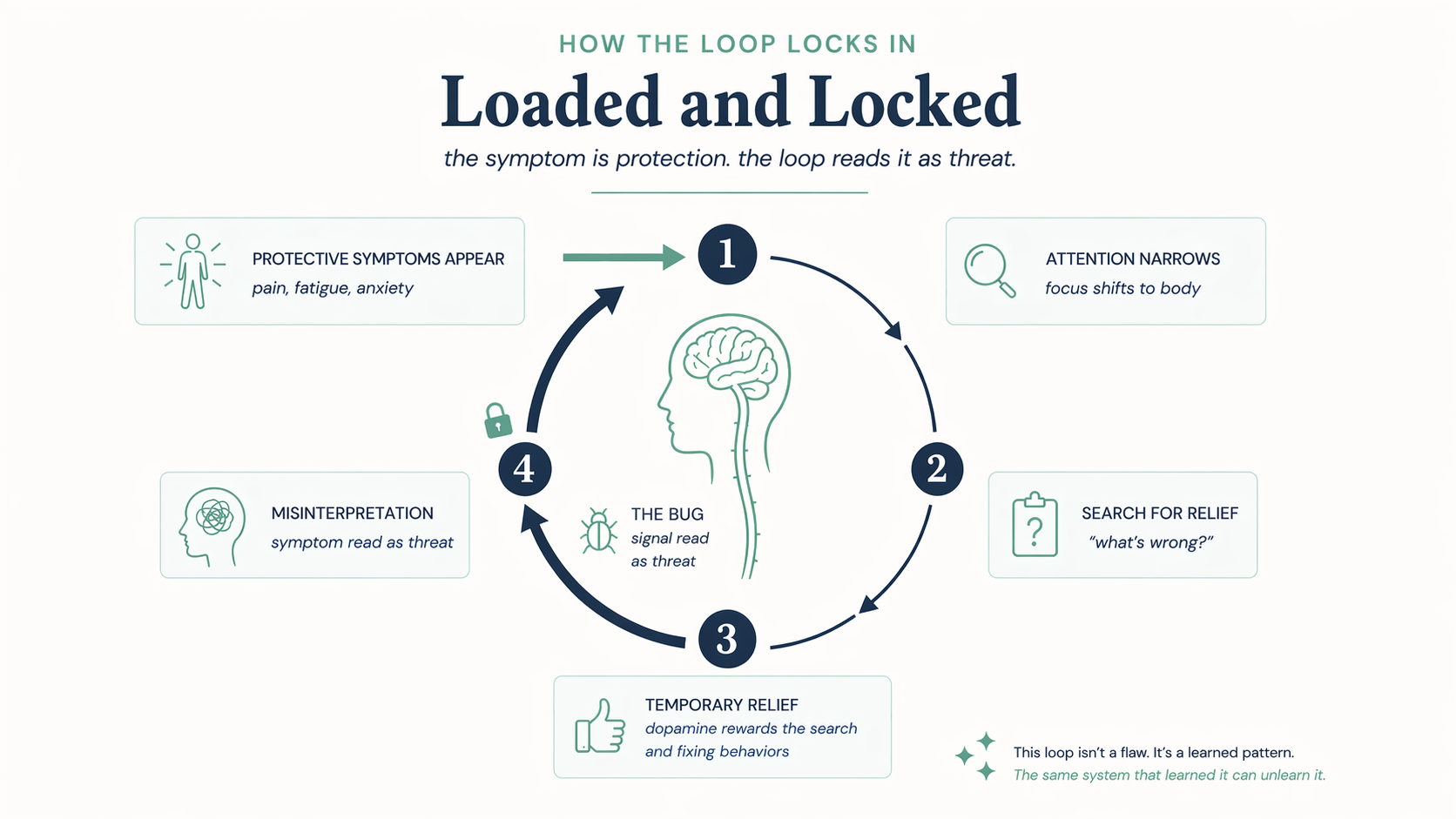
Pain is a request for action. When it appears, the brain looks for a way to make you safe. Searching, checking, and problem-solving are that attempt. The brief relief of doing something rewards the behavior. The brain files the result: this symptom matters, keep it loud, keep searching. Pain and the search for safety become coupled. This is the locked half of the Loaded and Locked model.
Why searching makes it worse
The search feels productive. It is the opposite. Every loop teaches the brain to take the symptom more seriously, which raises its volume. The more you monitor, the louder it gets. This is why people who track every sensation, read every forum, and book every test often feel worse, not safer. The behavior that promises relief is feeding the problem.
Monitoring is not neutral. It is part of the trap.
Relief by collapse vs relief by resolution
There are two ways the loop can end. Collapse, where you distract or numb until the urge passes. And resolution, where you change your relationship to the symptom so it no longer demands the search. Collapse gives short relief and keeps the loop intact. Resolution unwinds it. Most coping strategies are collapse. Building the resolution skill is the work of nervous system retraining.
The link to health anxiety
If this sounds like anxiety, that is because it is the same machinery. The pain-search loop is a body-focused version of the worry-and-check cycle that drives health anxiety. The symptom raises threat, checking briefly lowers it, and the relief locks the habit in. Naming it this way is not dismissive. It points to a well-understood way out: reduce the checking, and the urge weakens over time.
How to start breaking the loop
- Name it. When the urge to search arrives, label it: "This is the loop."
- Delay the response. Do not act on the urge for sixty seconds. Let it rise and fall without feeding it.
- Breathe and stay. A longer exhale lowers the activation under the urge.
- Choose resolution over collapse. Instead of researching, meet the sensation as real but not dangerous, then return to what you were doing.
- Repeat. Each time you do not feed the loop, the coupling loosens a little. This is learning, not willpower.
The same protective machinery drives the fight-or-flight response behind your symptoms, which is why calming the system and breaking the loop work together.
Common questions
What is the fibromyalgia pain-search loop?
It is the cycle in which a symptom drives searching and checking, the searching brings brief relief, and that relief teaches the brain to keep the symptom loud, coupling pain with the search for safety.
Why can't I stop checking my symptoms?
Because checking briefly lowers anxiety, which rewards the behavior. The brain learns the symptom is important and the checking is necessary, so the urge returns. It is a learned habit, not a weakness.
Does monitoring symptoms make fibromyalgia worse?
It can. Constant monitoring raises the threat the nervous system is responding to and strengthens the loop that keeps symptoms loud, so it tends to amplify rather than ease them.
How do I stop googling my symptoms?
Name the urge, delay acting on it, breathe, and choose to meet the sensation as safe rather than research it. Each time you do not feed the loop, the urge weakens. Reducing checking is the practice itself.
Is constant symptom-checking related to anxiety?
Yes. The pain-search loop uses the same worry-and-check machinery as health anxiety. That is good news, because it means well-understood approaches for loosening checking habits apply.

Not another protocol. A map.
The free Fibromyalgia Healing Roadmap shows how to unwind the pain-search loop across four practical phases.
Get the free roadmapThis article is educational and is not medical advice.